Cover of Lean Enterprise Architecture by Romano Roth and Dietmar Wettach: a hooded figure holding a blue blade in a red circuit-diagram corridor

Lean Enterprise Architecture

A Practical Guide to Value-Driven Enterprise Architecture

Get enterprise architecture out of the ivory tower. A practical guide that treats EA as a leadership discipline connecting strategy with execution and business with technology.

PDFEPUBWeb

From USD 12.99, suggested USD 19.99. Pay what you think it is worth.

In preparation: 31 translations and the course on Leanpub; Kindle, hardcover and paperback on Amazon.

32 chapters
7 parts
99 diagrams
510 pages

What is inside

Seven parts

I

EA Foundation

Establishes the conceptual foundation for enterprise architecture, covering definitions, roles, communication, lean principles, and maturity assessment.

II

Strategy & Transformation

Connects enterprise architecture to organizational change, covering transformation planning and change management.

III

Architecture Domains

Explores the six core architecture domains: business, capability, information, application landscape, data, and integration.

IV

Governance & Steering

Covers the governance mechanisms that make architecture decisions stick: compliance frameworks, portfolio management, and IT controlling.

V

Methods & Tools

Enterprise architecture does not happen in the abstract. It requires a shared language, a structured process, and the right instruments to turn strategic intent into operational reality.

VI

Technology & AI

Addresses the technology dimension of enterprise architecture, from strategy through operations and patterns, including AI fundamentals and practice.

VII

Conclusion

Synthesizes the key themes and provides forward-looking guidance for enterprise architects.

Three of 99

What the diagrams look like

Every diagram in the book is generated as SVG from code, not drawn by hand. These three are the files from the manuscript, unchanged.

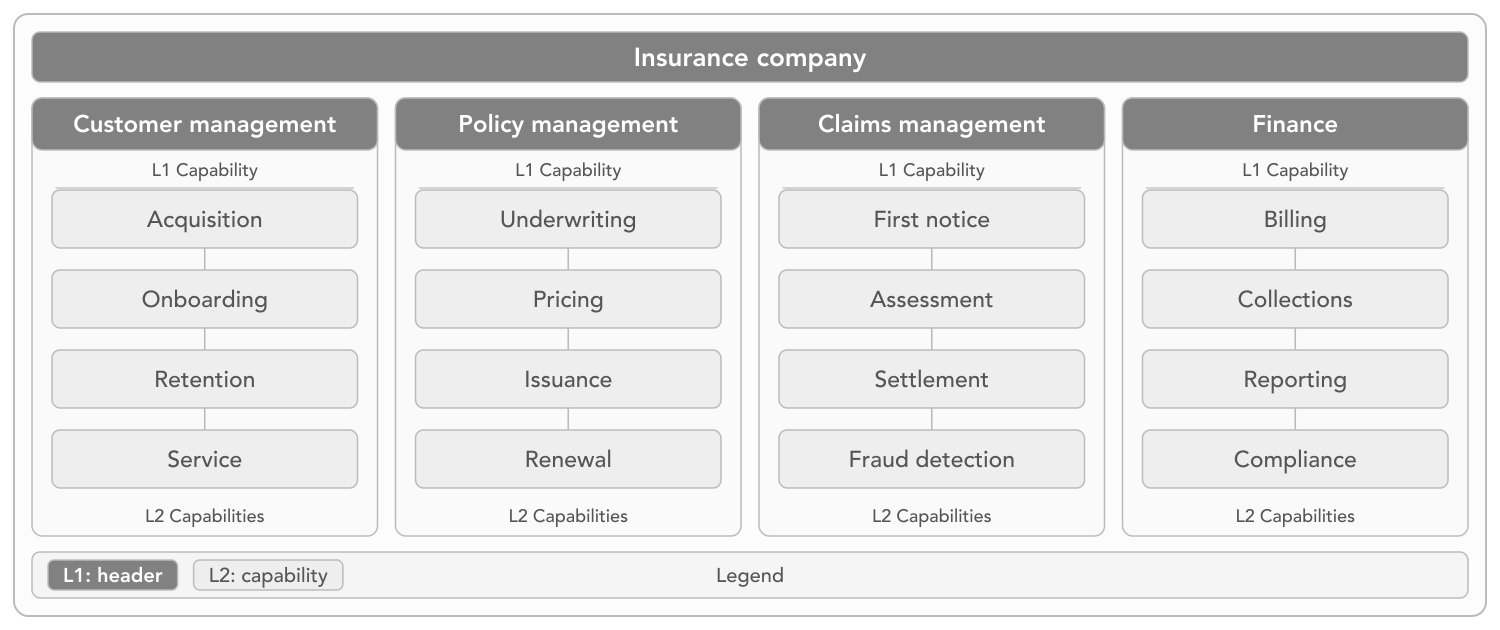
Capability map of an insurance company: level one domains in rows, each holding its level two capabilities
Chapter 9 · Capability Mapping A capability map for an insurer, level one domains with their level two capabilities.
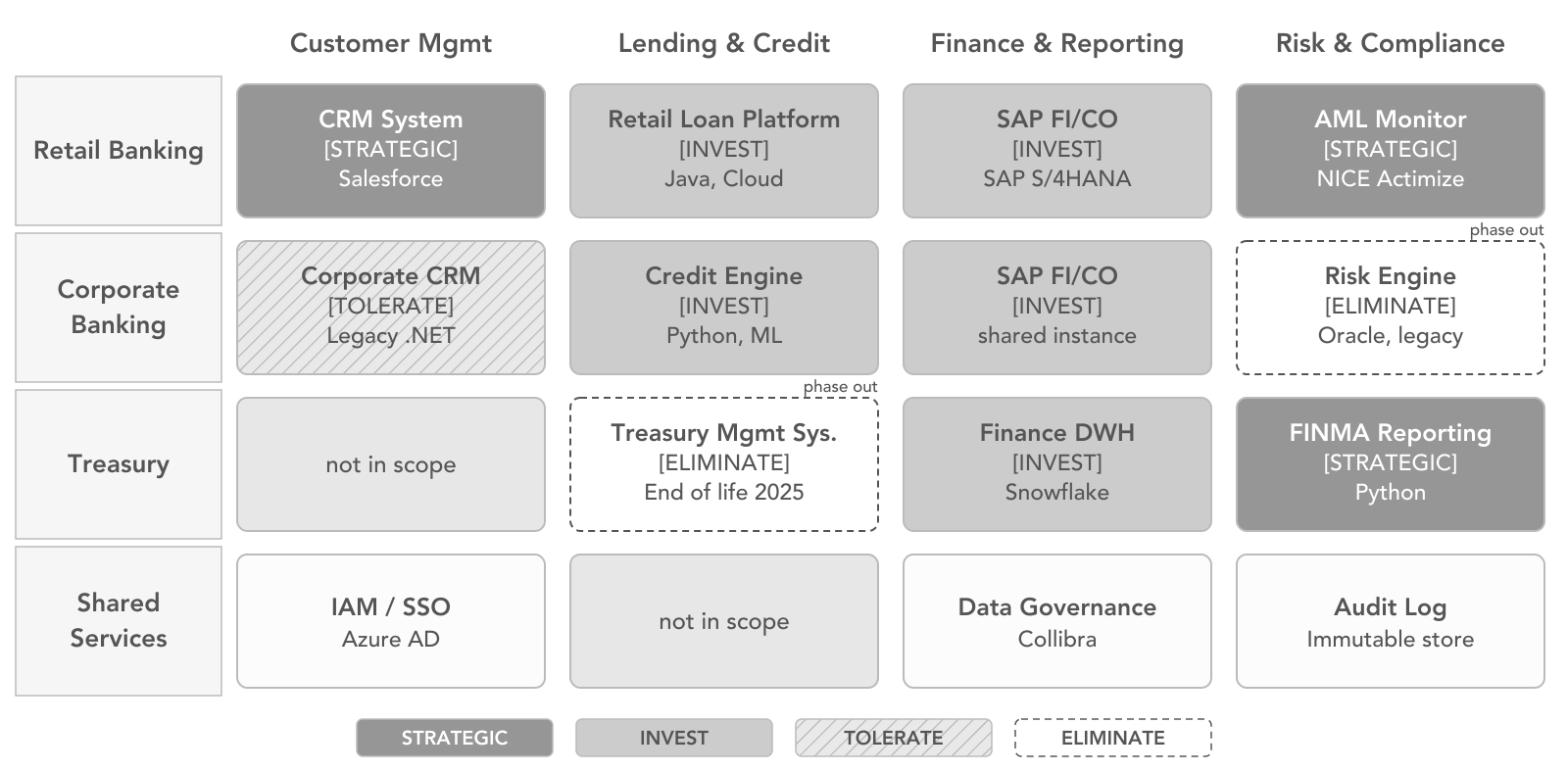
Landscape plan of a retail bank, applications arranged by capability and business unit and marked strategic, invest, tolerate or eliminate
Chapter 23 · EA Visualizations A landscape plan for a retail bank: applications by capability and business unit, each classified strategic, invest, tolerate or eliminate.
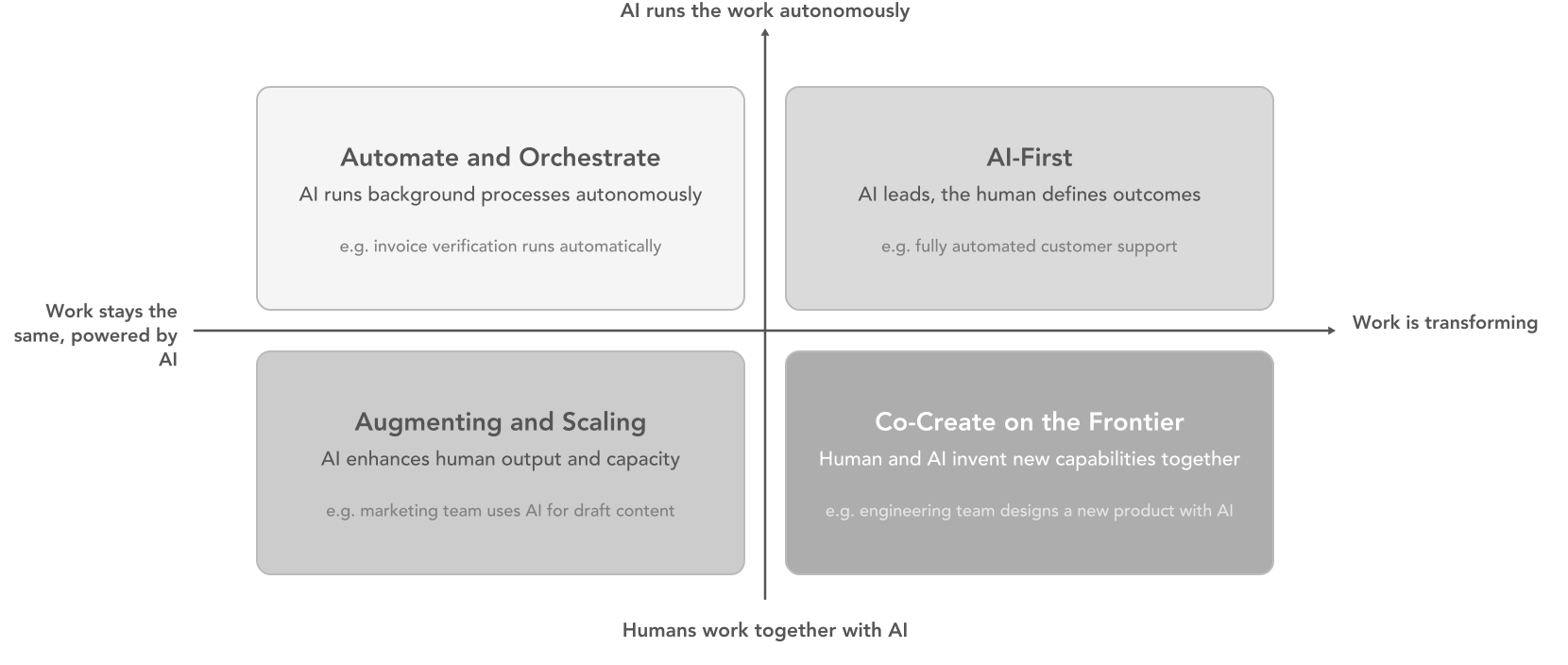
Matrix of human and AI work distribution, with who leads the work on one axis and whether the work is transformed on the other
Chapter 31 · AI in Practice The human-AI work distribution matrix: who leads the work, and whether the work itself changes.

Why this book

Enterprise architecture is the practice of shaping an organization’s structure so that business strategy and technology work together effectively. That much is not in dispute. What goes wrong is everything after it.

There is a pattern to how EA practices fail. The models get more detailed, the governance gets heavier, and the people who make the real decisions stop showing up. The architecture is correct, and nobody uses it.

Lean Enterprise Architecture treats EA as a leadership discipline that connects strategy with execution and business with technology. It applies one rule throughout: start small, deliver value early, and expand only where the organization genuinely benefits. “Lean” here means prioritizing practical relevance over theoretical completeness, not minimizing page count.

What you will learn

  • Position EA as a steering instrument that translates strategy into roadmaps and traceable decisions.
  • Design business architectures with capability maps and use them to plan your application landscape.
  • Drive enterprise transformation and change management with proven frameworks and patterns.
  • Set up governance that works: project portfolio management, IT controlling, and the Three Lines of Defense applied to architecture, without heavyweight bureaucracy.
  • Model and communicate with TOGAF, Zachman, ArchiMate, BPMN, DMN, UML and C4.
  • Navigate today’s technology landscape, from cloud-native platforms and API-first integration to FinOps, and treat digital sovereignty under DORA, NIS2, GDPR and the Swiss DSG as an architectural concern.
  • Work with artificial intelligence as an enterprise architect, from how LLMs work to the four risk tiers of the EU AI Act and what they demand of AI governance.

Who it is for

For enterprise, business and solution architects, IT strategists, and the transformation leads who work with them. Whether you come from a technical background moving toward strategy, or from a business background trying to understand technology decisions, the book meets you where you are.

It is also the lecture companion for the CAS Enterprise Architecture program at the Lucerne University of Applied Sciences and Arts, and built to stay on your desk afterwards. Nearly every chapter opens with learning objectives and closes with key takeaways. Two chapters depart from that pattern because both are wrap-ups. 28 of the 32 chapters map to a CAS module, and the remaining four add material the program does not cover: application landscape planning, integration architecture, and the two wrap-up chapters.

How this book was made

The book is built the way we teach teams to build software. The manuscript lives in a Git repository as plain text. A push to the main branch triggers Leanpub through a webhook, which builds a new PDF, EPUB and web version. There is no separate publishing step: every commit that ships produces a new version of the book.

Behind it are more than 400 commits, roughly 138,000 words and 99 diagrams, each one generated as SVG from code rather than drawn by hand. AI helped shape structure, draft and clarify passages, generate diagrams, run review passes and move between languages. At every stage the two of us remained the deciding minds. AI proposed, we chose.

The authors

Portrait of Romano Roth

Romano Roth

Group Chief AI Officer & Partner at Zühlke

Romano Roth is Group Chief AI Officer and Partner at Zühlke, with more than two decades in finance, insurance, energy, healthcare and aerospace. He lectures at HSLU and presides over DevOpsDays Zürich.

Portrait of Dietmar Wettach

Dietmar Wettach

Head of Program at HSLU, Identity & Access Management at Flughafen Zürich AG

Dietmar Wettach runs the global roles and permissions concept at Flughafen Zürich AG. As Head of Program at HSLU he co-leads the CAS Enterprise Architecture and the CAS Cloud and Platform Manager.